
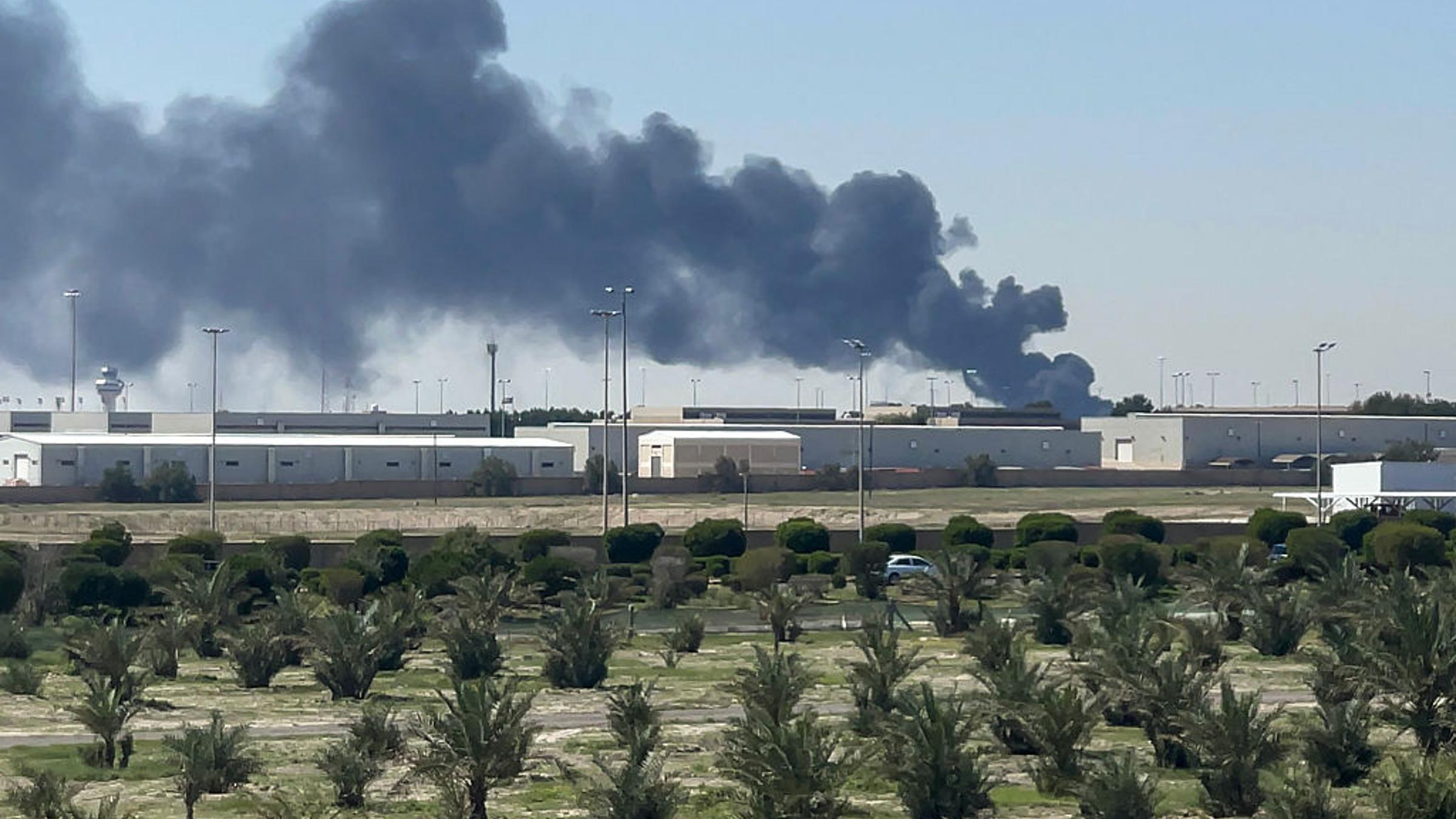
Summary
The IRGC's threat has significant implications for the tech industry and global politics. The targeted companies have a significant presence in the Middle East, and the IRGC's warning has raised concerns about the safety of employees and infrastructure in the region. The situation is being closely watched by **international leaders**, including those in the **European Union** and **China**. The conflict has also sparked debates about the use of **artificial intelligence** and **cybersecurity** in military operations, with some arguing that these technologies are being used to enable attacks on civilians. For more information on the use of AI in military operations, see [[artificial-intelligence-in-military|Artificial Intelligence in Military]].
Key Takeaways
- The IRGC has released a list of 18 potential targets for retaliation, including Apple, Google, and Meta
- The U.S. and Israel have killed several high-ranking Iranian officials, including Supreme Leader Ali Khamenei and Revolutionary Guards commander-in-chief Mohammad Pakpour
- The companies on the list have operations in or commercial ties to Israel
- The situation is volatile, and it is unclear what the consequences of further escalation may be
- The international community should support efforts to mediate a peaceful resolution
Balanced Perspective
The situation is **complex** and **multifaceted**, with various factors at play. The IRGC's threat is a **serious** development, but it is unclear whether they have the **capability** to carry out such attacks. The U.S. and Israel have **denied** any involvement in the assassinations of Iranian leaders, and it is unclear what **evidence** the IRGC has to support their claims. The conflict has significant implications for **global stability** and **energy security**, and it is being closely watched by **international leaders**. For more information on the implications of the conflict, see [[global-stability|Global Stability]] and [[energy-security|Energy Security]].
Optimistic View
The IRGC's threat may be a **bluff**, and the U.S. and Israel may be able to negotiate a peaceful resolution to the conflict. The fact that the IRGC is warning of retaliation suggests that they are trying to **de-escalate** the situation, rather than escalate it further. Additionally, the involvement of **international organizations**, such as the **United Nations**, may help to **mediate** a peaceful resolution. For more information on the role of international organizations in conflict resolution, see [[united-nations|United Nations]].
Critical View
The IRGC's threat is a **serious** development, and the U.S. and Israel should take it **seriously**. The fact that the IRGC is warning of retaliation suggests that they are **prepared** to take action, and the U.S. and Israel should be **prepared** to respond. The conflict has already resulted in the deaths of high-ranking Iranian officials, and it is unclear what **further escalation** may occur. The situation is **volatile**, and it is unclear what the **consequences** of further escalation may be. For more information on the consequences of further escalation, see [[iran-us-conflict-escalation|Iran-US Conflict Escalation]].
Source
Originally reported by Time Magazine